0-to-1 Product Incubation
Turning emerging opportunities into tangible product bets.
I helped build Visa North America’s product incubation practice from the ground up—shaping the strategy, operating model, team, and process for turning broad opportunity spaces into concepts leaders could evaluate and invest behind. Over the course of a year, we explored opportunities across emerging areas including embedded finance, digital identity, social commerce, electrification, and GenAI; translated them into product propositions and pilots; and built the customer, business, and technical evidence needed to determine what should move forward.
Along the way, I served as interim Head of Product & Design for a 13-person team, grew the design organization from one to six, and established an incubation approach that was adopted across both North America and Latin America.
cross-functional team members led as interim Head of Product & Design
months from strategy to validated pilot concepts
high-value pilots taken from discovery to validation
designers on the team I grew from one
The NA Innovation practice was built, essentially, from scratch including strategy, operating plan, and implementation. Kelly was instrumental in making that happen, playing a lead role in defining the narrative that brought it all together, which was evangelized across Visa Senior Leadership Team.— Mike Muniozguren · Senior Director, Big Tech and Fintech Advisory
By shifting the team’s focus towards exploring, validating, and advancing new ideas into concepts and pilots, Kelly has enabled the team to deliver three proof of concepts this year… identify multiple product opportunities for embedded finances, digital identity, and value-add services… Her ability to double-head her role as a Strategy Designer and Head of Products Incubation… showcases her commitment to driving results.— Vanessa Meyer · VP, Head of America’s Innovation
Where to Play
We weren’t handed a backlog of ideas. One of our first challenges was determining where Visa should focus its innovation efforts in the first place.
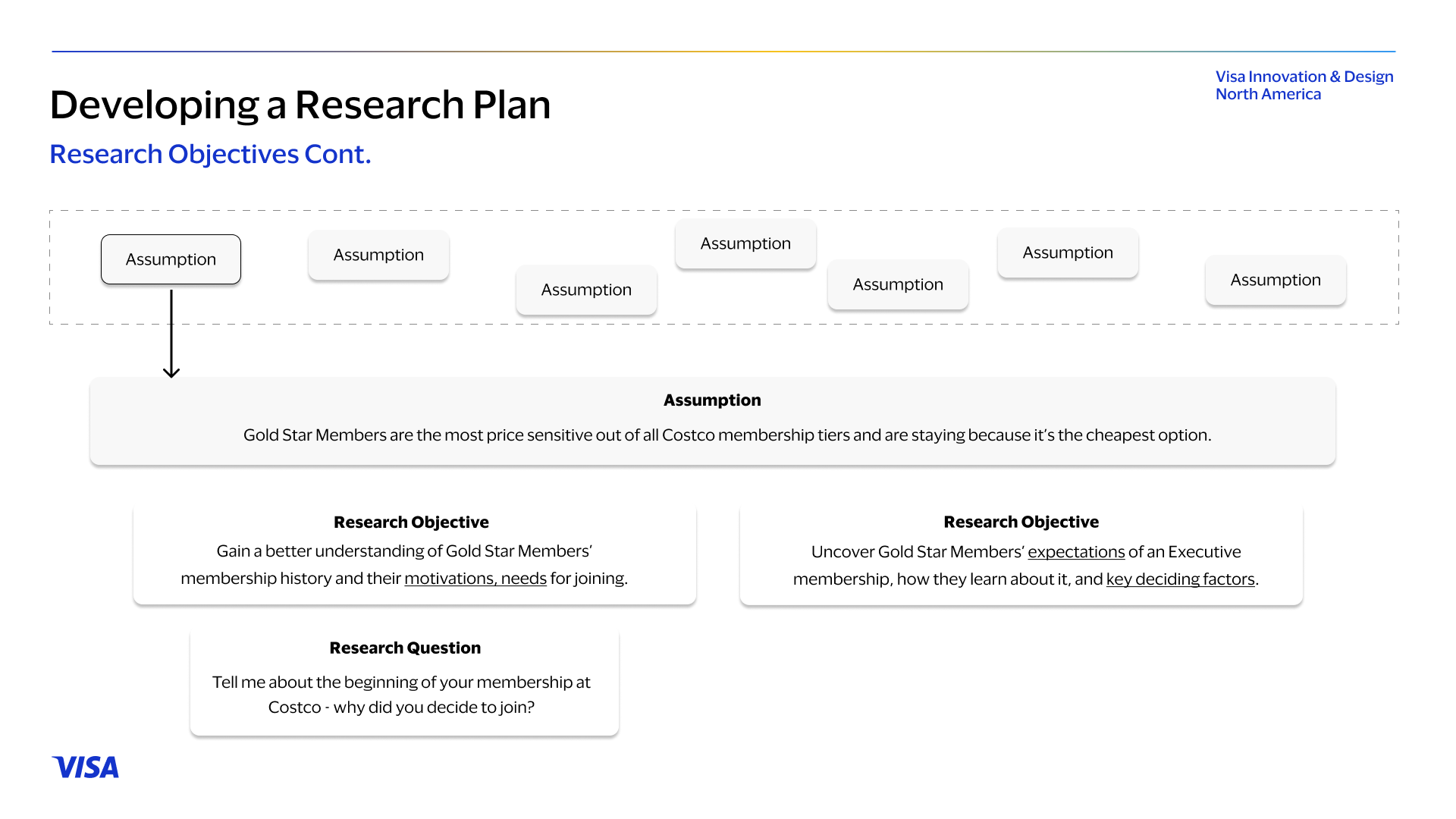
We combined strategic foresight, market and business research, and more than 45 conversations across the organization to surface emerging opportunities, then brought 13 cross-functional teams together to evaluate them against Visa’s strategy, capabilities, customer needs, and potential for future growth. The result was a focused portfolio of opportunity areas with enough strategic rationale to warrant deeper investment.
The Model
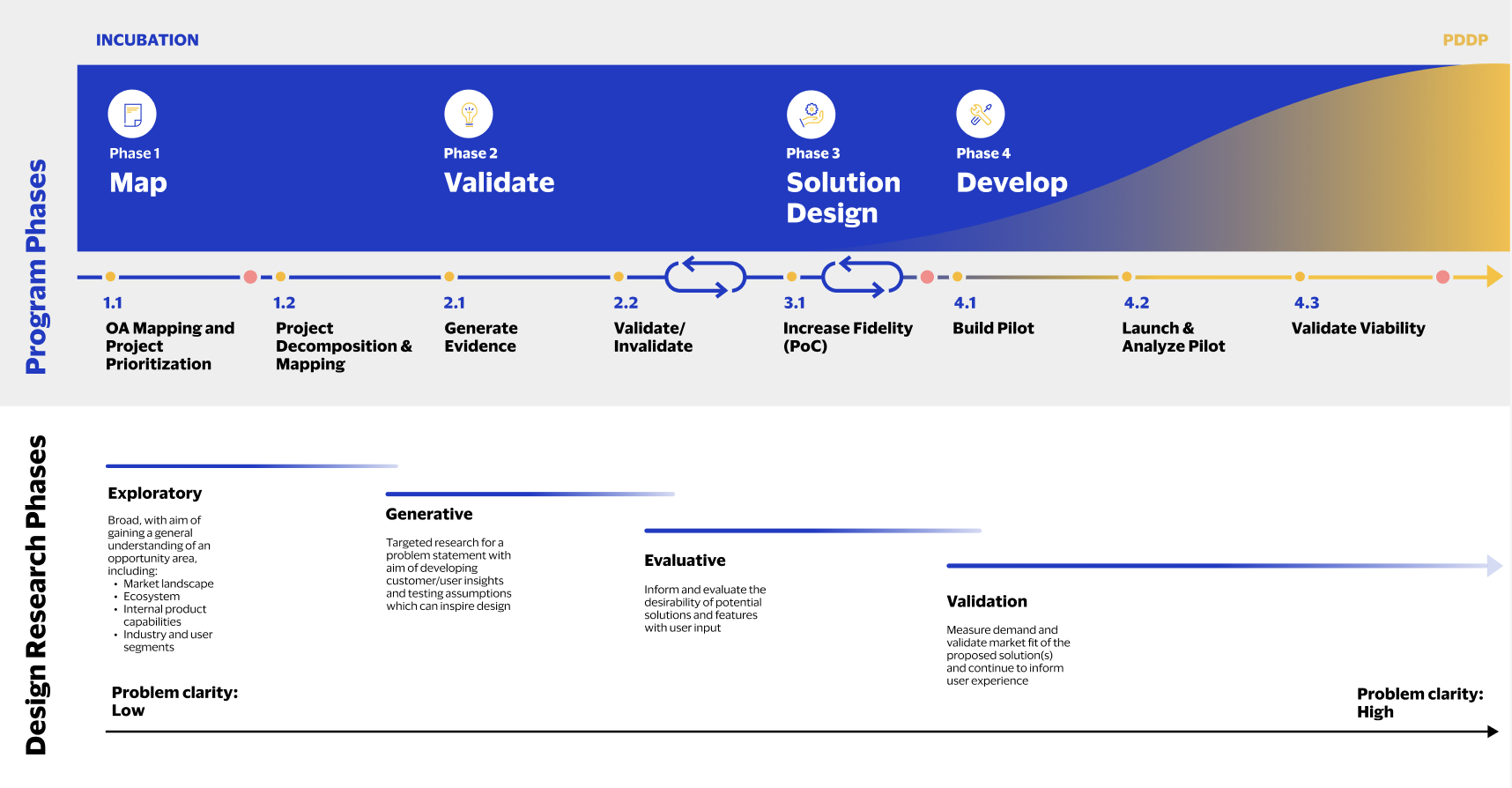
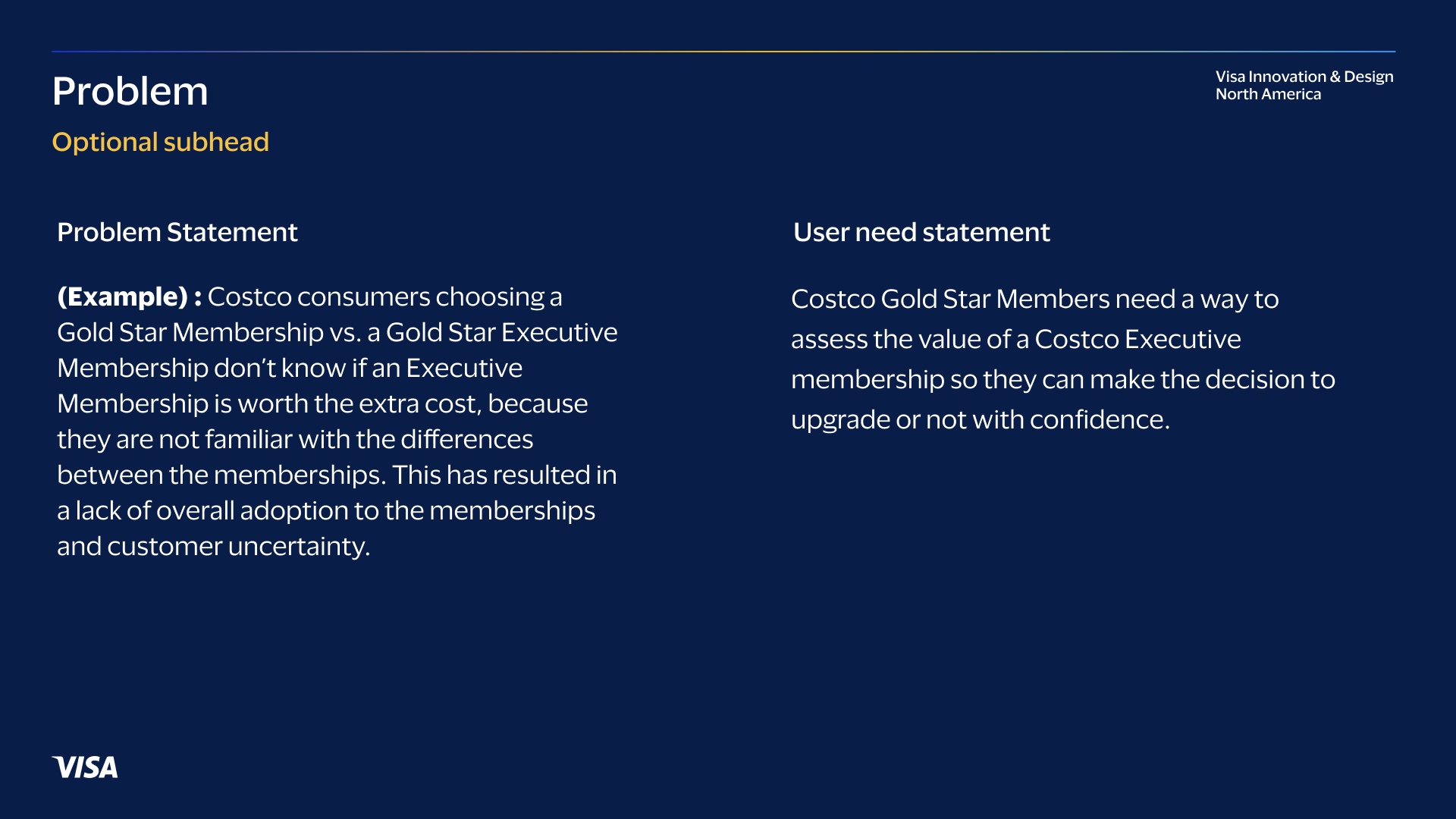
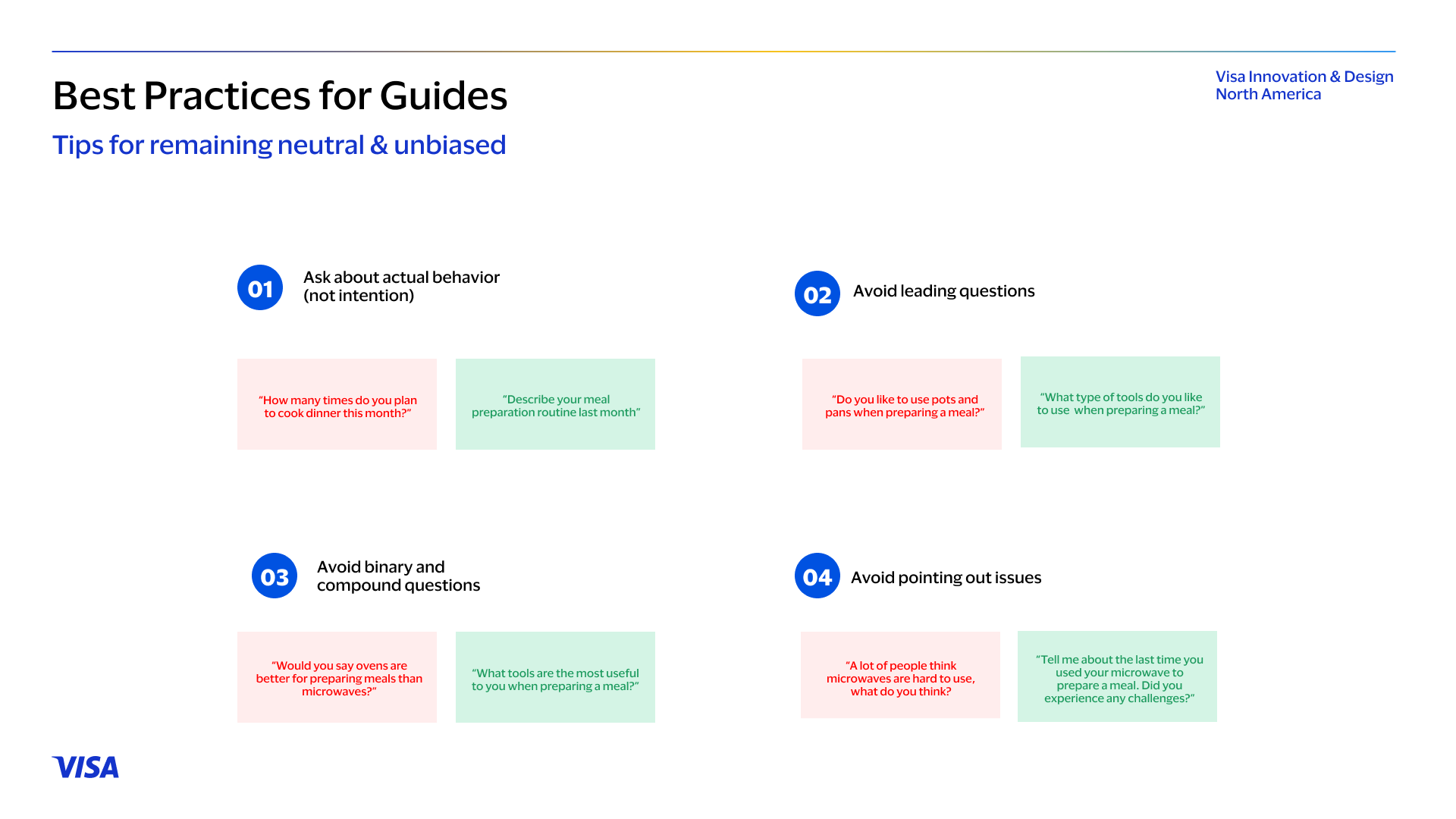
I helped translate our strategy into a repeatable incubation model that moved work through increasingly higher levels of evidence: prioritize and map, validate, design the solution, develop and pilot. Each phase had explicit decision points—teams mapped customers and jobs-to-be-done, tested assumptions, quantified pain points, validated desirability and viability, prototyped experiences, assessed technical feasibility, and developed the business model before advancing.
The goal wasn’t to prove every idea was right. It was to make kill, pivot, or invest decisions earlier—and give the strongest concepts a clear path into the product organization.
Luxury Authentication
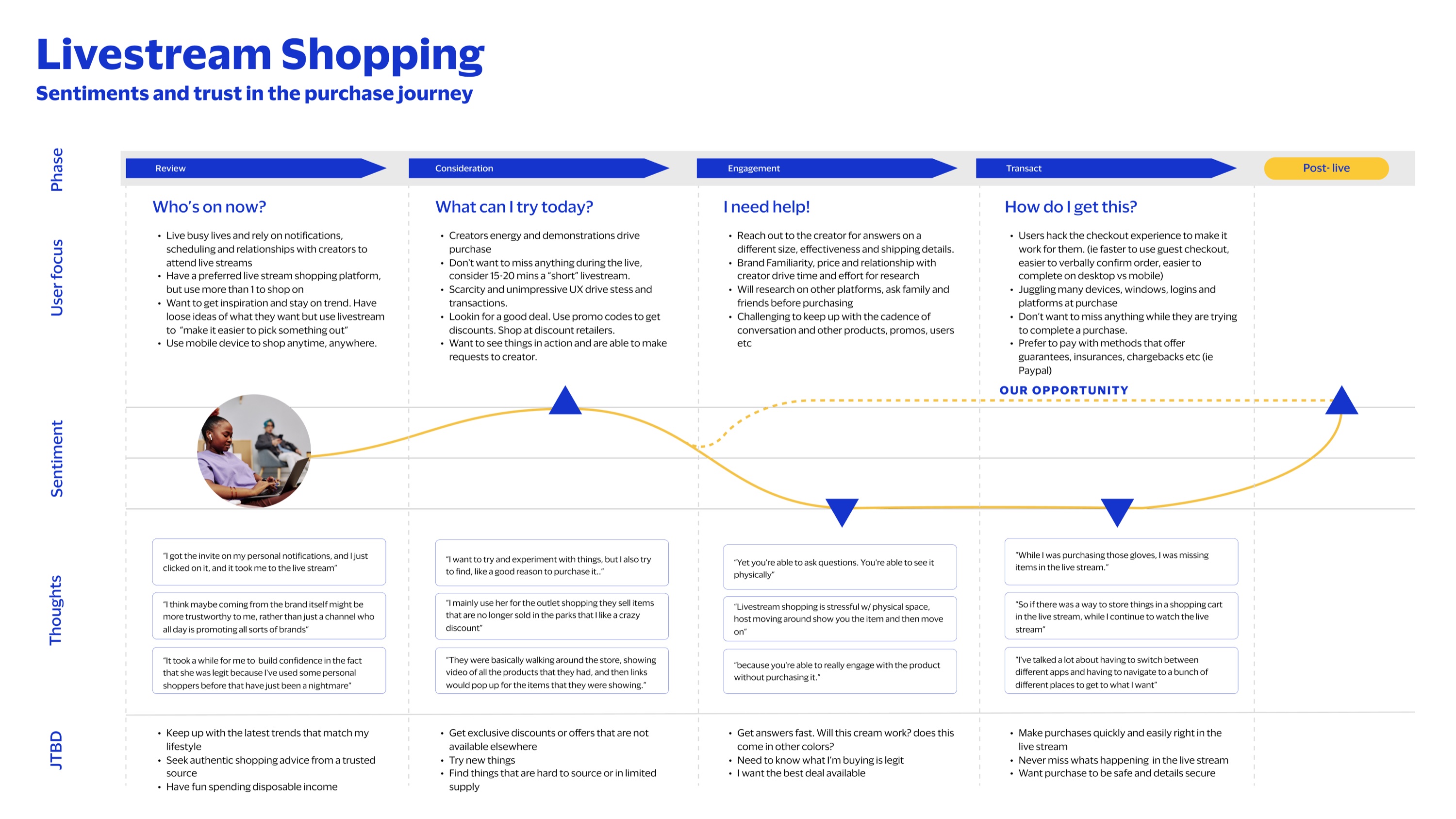
We began by exploring embedded finance opportunities within social and creator-led commerce. As the work progressed, the opportunity sharpened around a more specific problem: trust in the rapidly growing luxury resale market. We pivoted toward product authentication, ultimately developing a concept that could verify goods and transfer proof of ownership across resale platforms. It secured a beta partner, represented a multi-hundred-million-dollar revenue opportunity, and contributed to a provisional patent filing.
Electrification
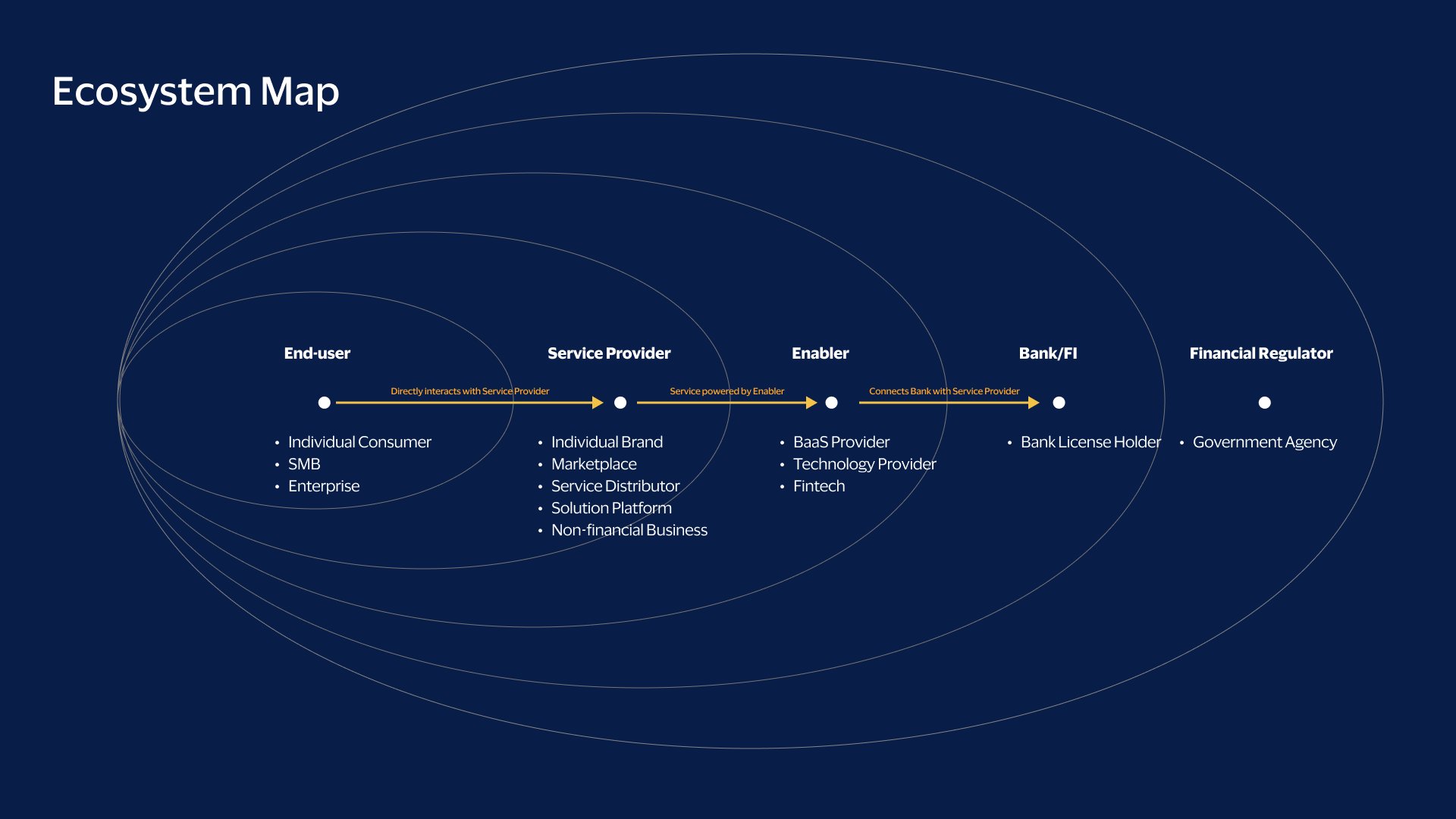
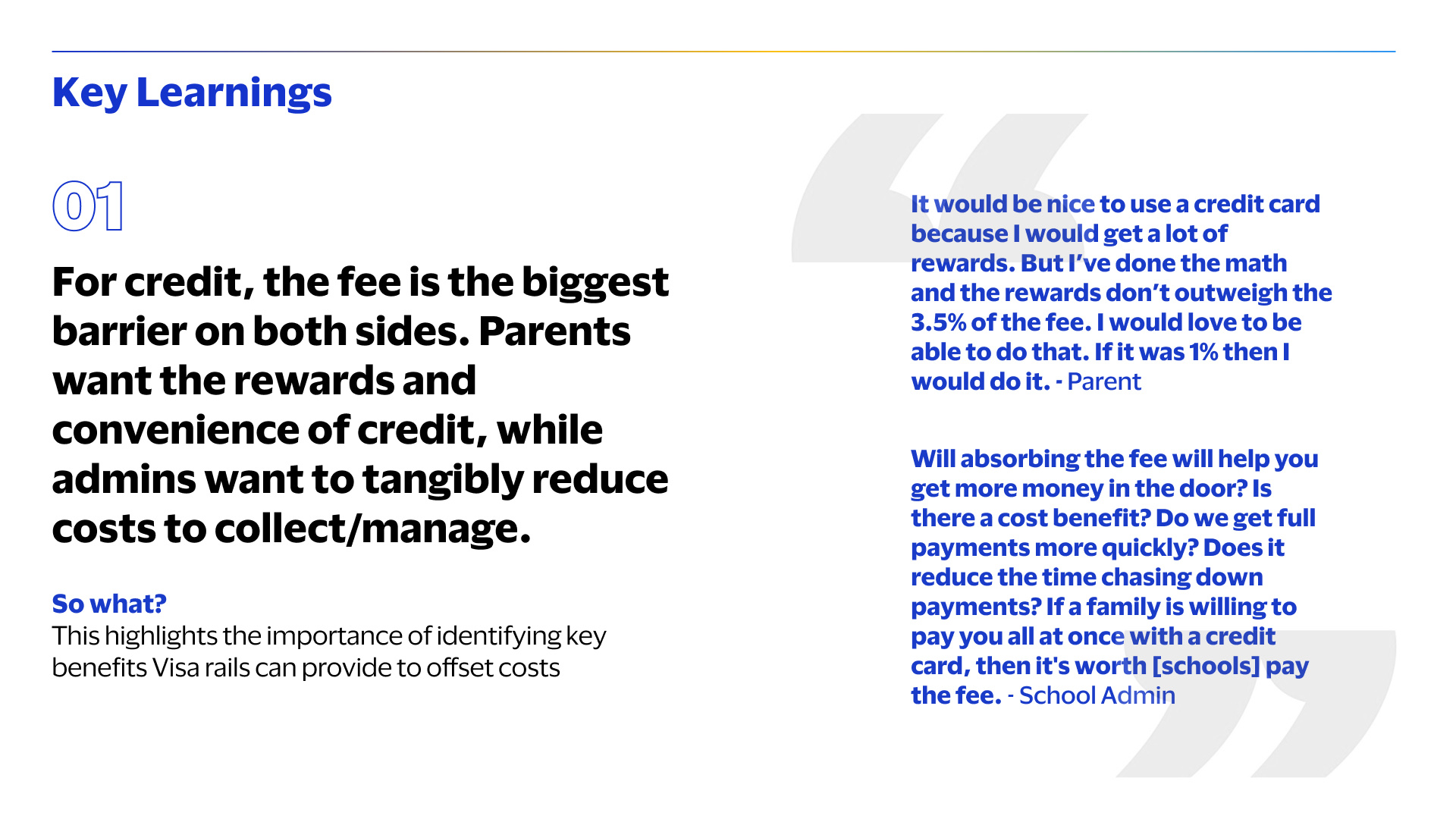
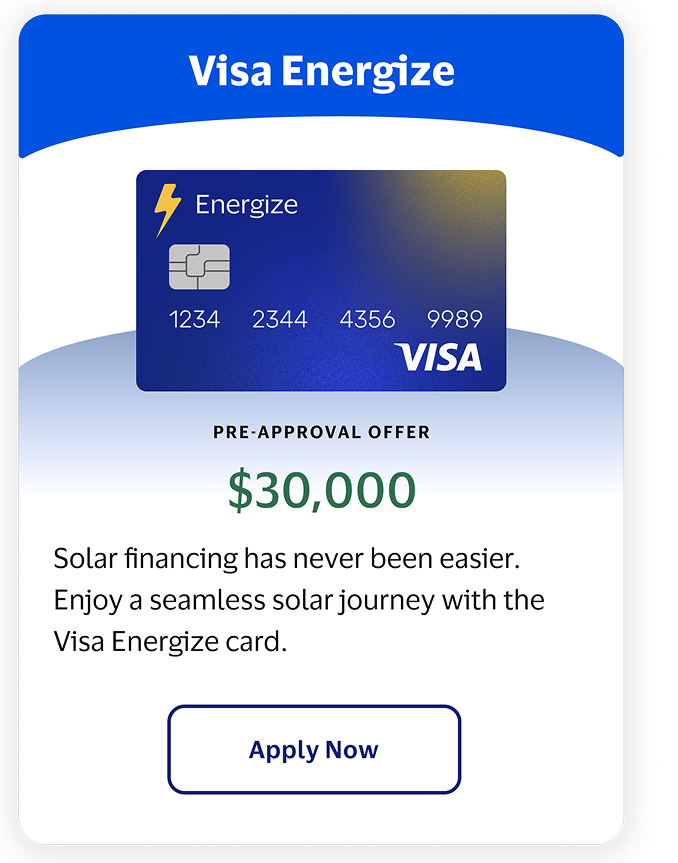
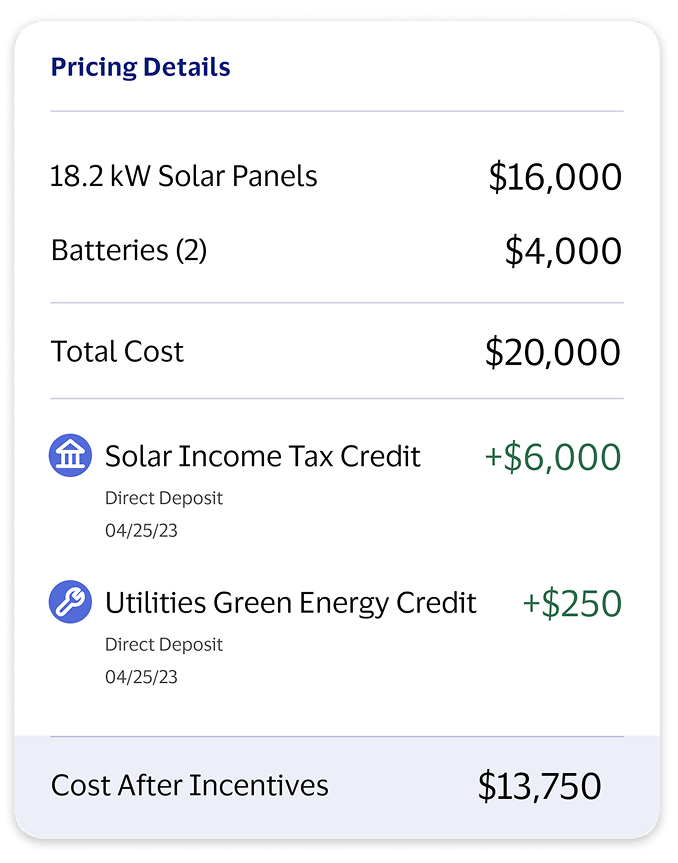
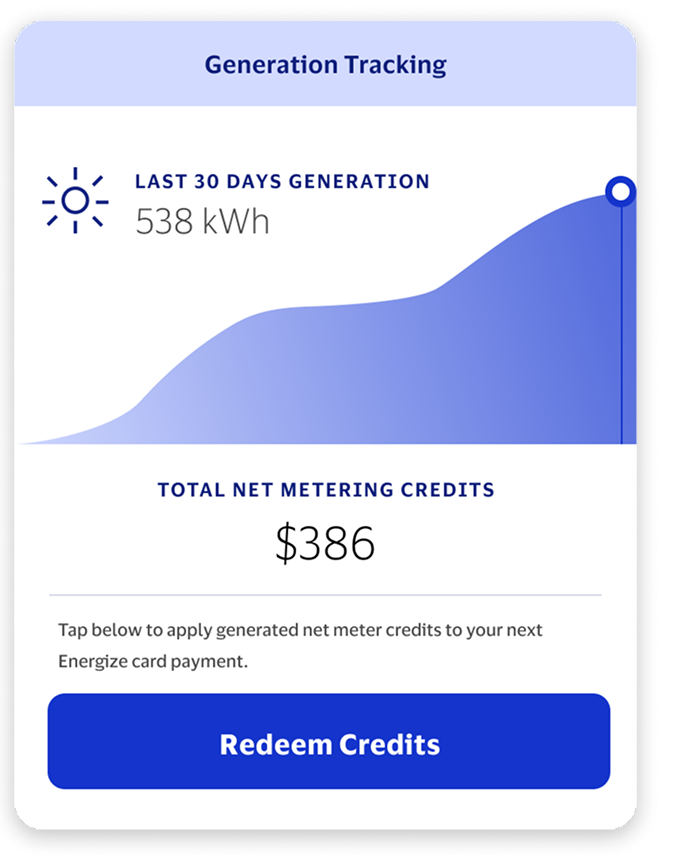
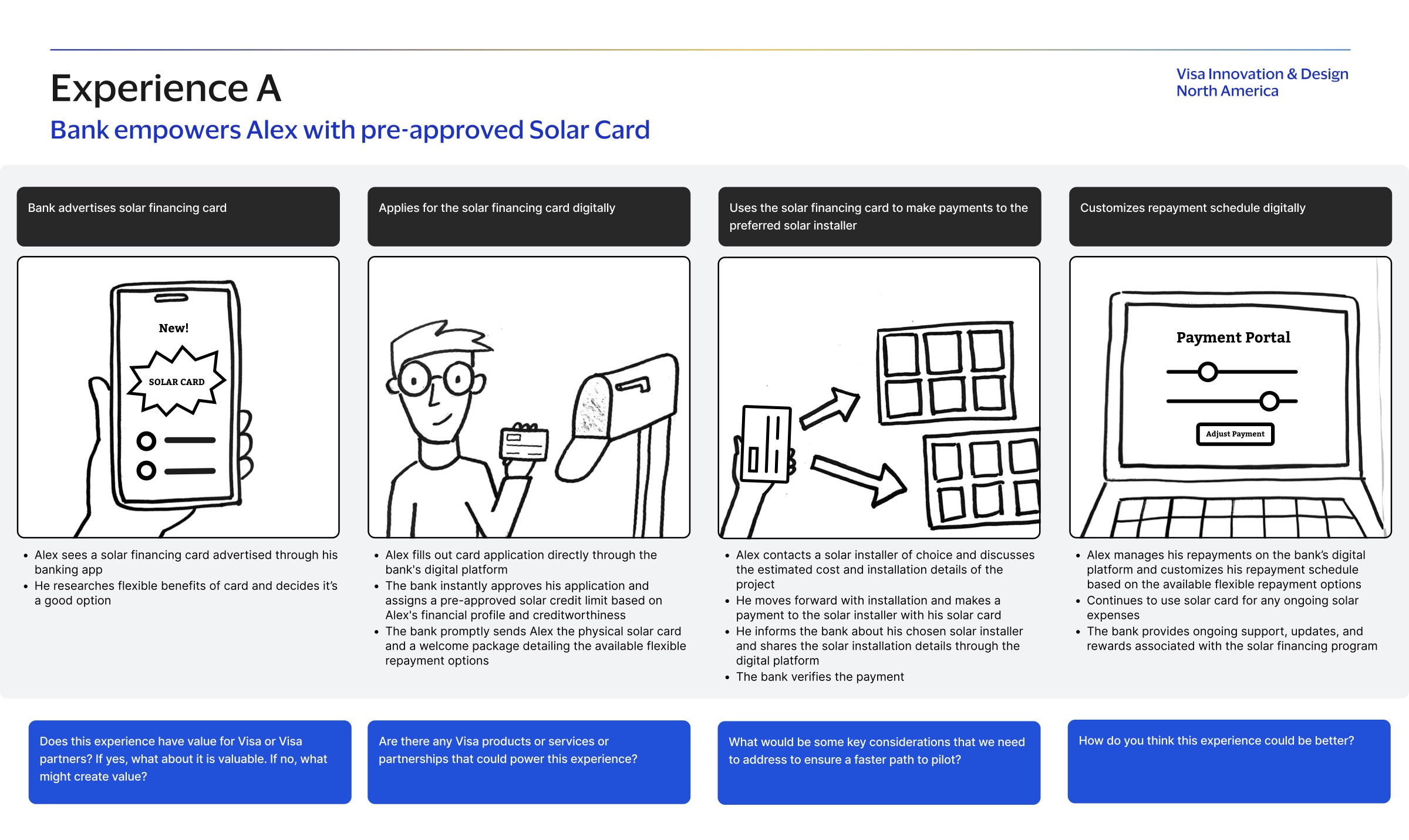
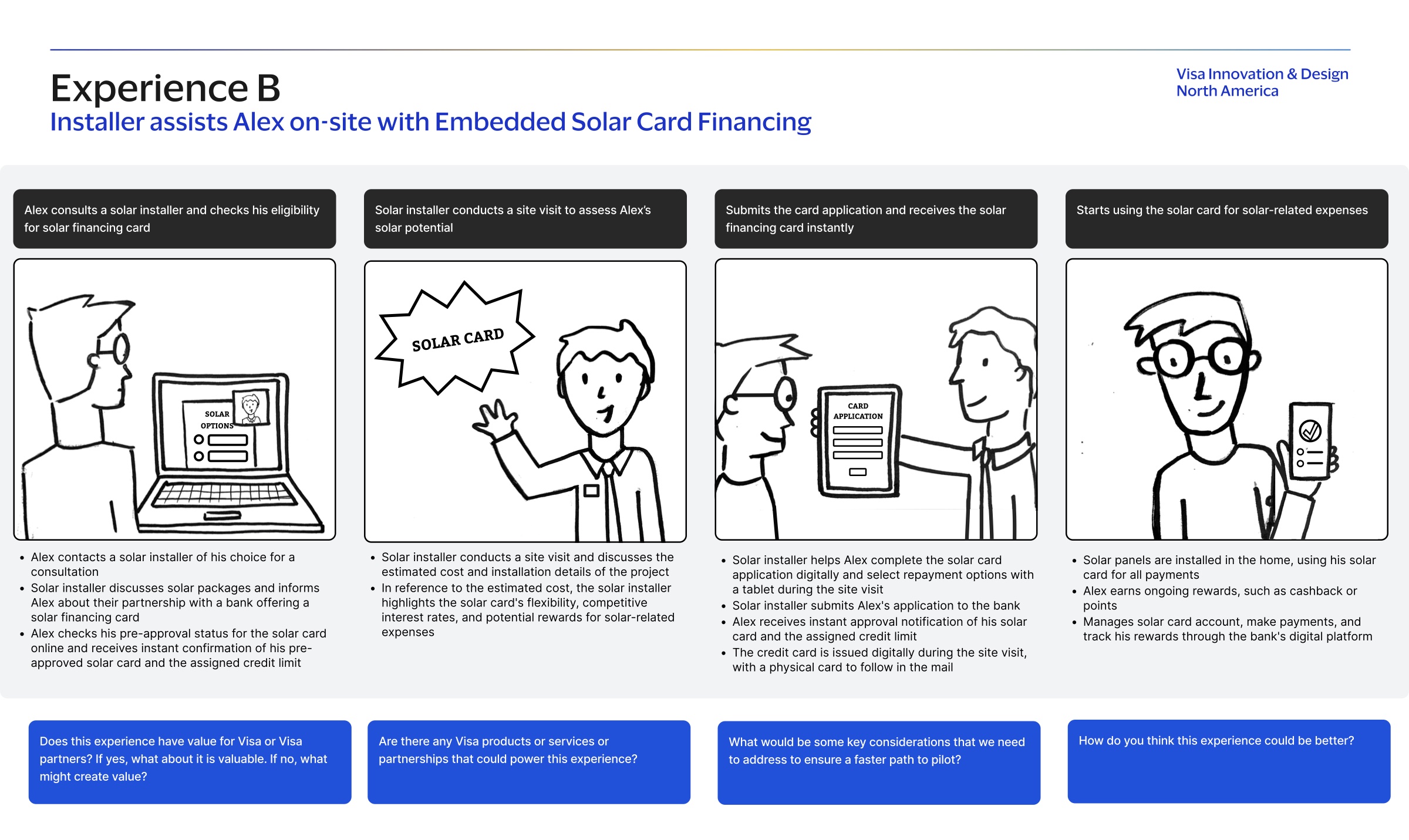
We explored how Visa could reduce one of the biggest barriers to home electrification: the cost and complexity of financing. After mapping the solar ecosystem and validating pain points around affordability, access, and incentives, the team developed a consumer-validated embedded-finance concept that combined flexible financing for large energy purchases with integrated rebates, tax credits, and rewards. The work identified a multi-billion-dollar potential opportunity and translated a complex ecosystem into a tangible proposition for accelerating homeowner adoption of clean energy.
Generative AI
As GenAI began reshaping the payments landscape, I led a foresight effort to turn an emerging technology into tangible customer and business scenarios. I brought together 40 stakeholders to identify high-value use cases, authored narratives across consumers, merchants, financial institutions, governments, and businesses, and led six designers across three regions to bring those futures to life through animated experiences. The work gave partners and clients a concrete way to explore GenAI’s implications and helped position Visa as an early thought leader in the space.
Reflection
Innovation isn’t just about generating good ideas—it’s about creating the conditions that allow good ideas to survive. I learned that the hard way.
I loved the team and the work we were delivering. We built strong concepts, validated meaningful opportunities, and created a repeatable incubation model, but organizational priorities shifted before much of the work could reach market. At the time, that was frustrating, to say the least. In retrospect, it taught me something important: customer desirability, business viability, and technical feasibility aren’t the only factors that determine whether an idea moves forward. Sponsorship, timing, organizational alignment, and the ability to continually build conviction matter just as much.
It changed how I approach 0-to-1 work today. The product isn’t the only thing you have to design—you also have to design the path that gets it adopted.