Visa · 2025–Present

Changing how product decisions get made

I built Visa North America Product’s Design & Research function from zero and turned a two-person team into a strategic partner shaping decisions across multiple priority product areas. Within 13 months, we were influencing product strategy, helping teams make better decisions earlier, and contributing to work spanning customer value propositions, product development, and go-to-market strategy.

By creating a dedicated operating model and introducing new AI-enabled ways of working, we increased the team’s capacity and influence without adding headcount. The model earned enough trust that I was also asked to lead Visa’s seven-person Europe Design & Research team through a period of organizational transition.

0 → 2

team built and onboarded within three months

5

priority product areas influenced within the first 13 months

2

regions led, after also assuming leadership of Europe Design & Research

0

added headcount—capacity grew through AI-enabled ways of working

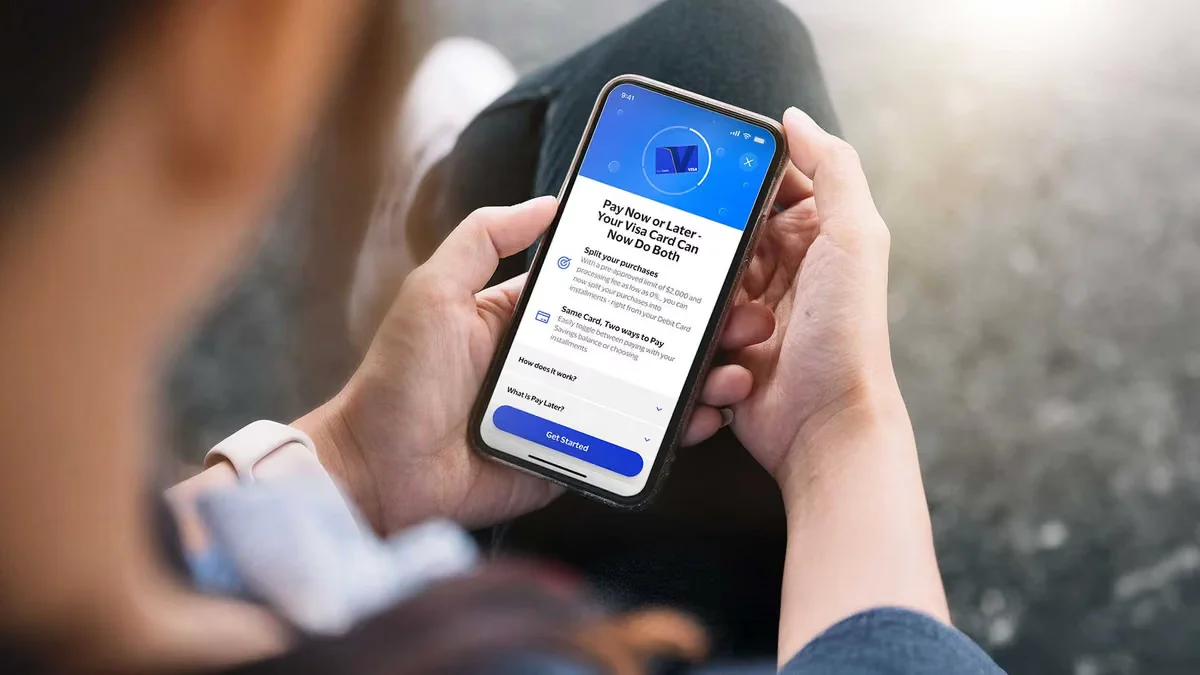
Person using the Pay Now or Later feature on a Visa card in the Visa mobile app
The Pay Now or Later feature in the Visa mobile app.
The collaboration and strategic thought partnership that Kelly and her team demonstrate sets a new standard for how design and research bring tangible value to business partners. A dedicated D&R model under Kelly’s leadership provides iterative agility without compromising domain knowledge and rigor, ultimately helping us drive better product decisions, earlier.
— Andy Sun · VP Product Strategy, Head of Debit
You bring a vibrant, creative energy to the team and played such an important role in getting Flex off the ground.
— James Hake · Senior Manager, Visa Strategic Initiatives

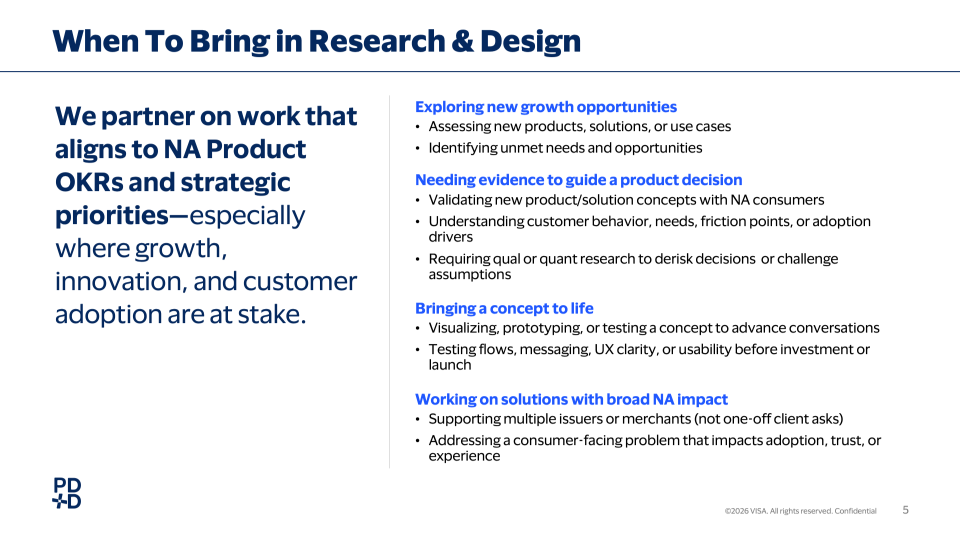
North America Product was moving fast across a broad portfolio, but it had no dedicated Design & Research capability built into how decisions got made. The opportunity wasn’t to add design resources to projects—it was to get customer evidence into the room early enough to shape what got built, not just how.

Instead of positioning the team to take requests downstream, I built relationships with product leaders directly and, through delivering quality work, earned a seat at the table.

One of the most important shifts was changing when Design & Research entered the conversation.

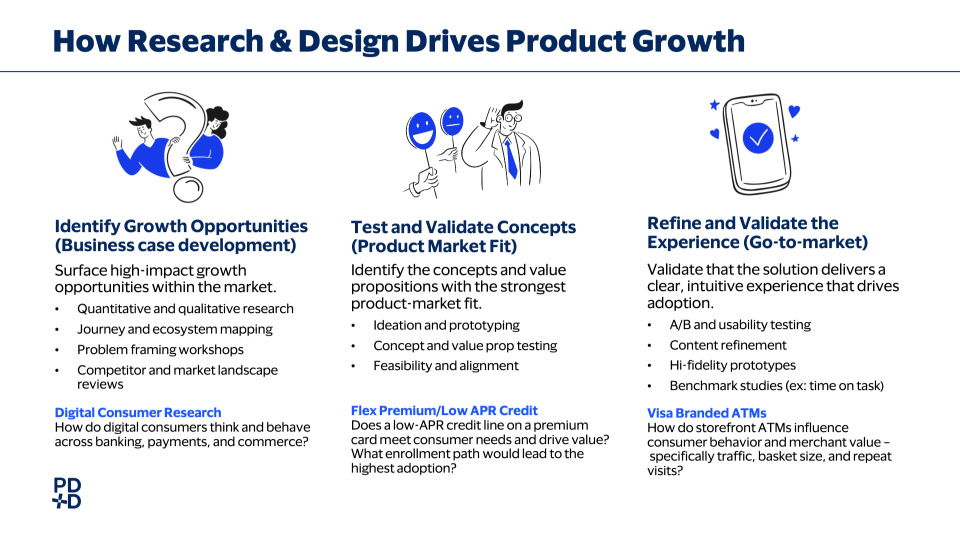
Instead of starting from a feature already scoped, we worked with product leaders on which customer problem was worth solving, what evidence we needed before investing further, and how customer behavior might reshape the product or go-to-market plan.

We used research, concept development, quantitative validation, and workshops to build evidence leaders could act on—not research for its own sake, but to cut the uncertainty around decisions that mattered.

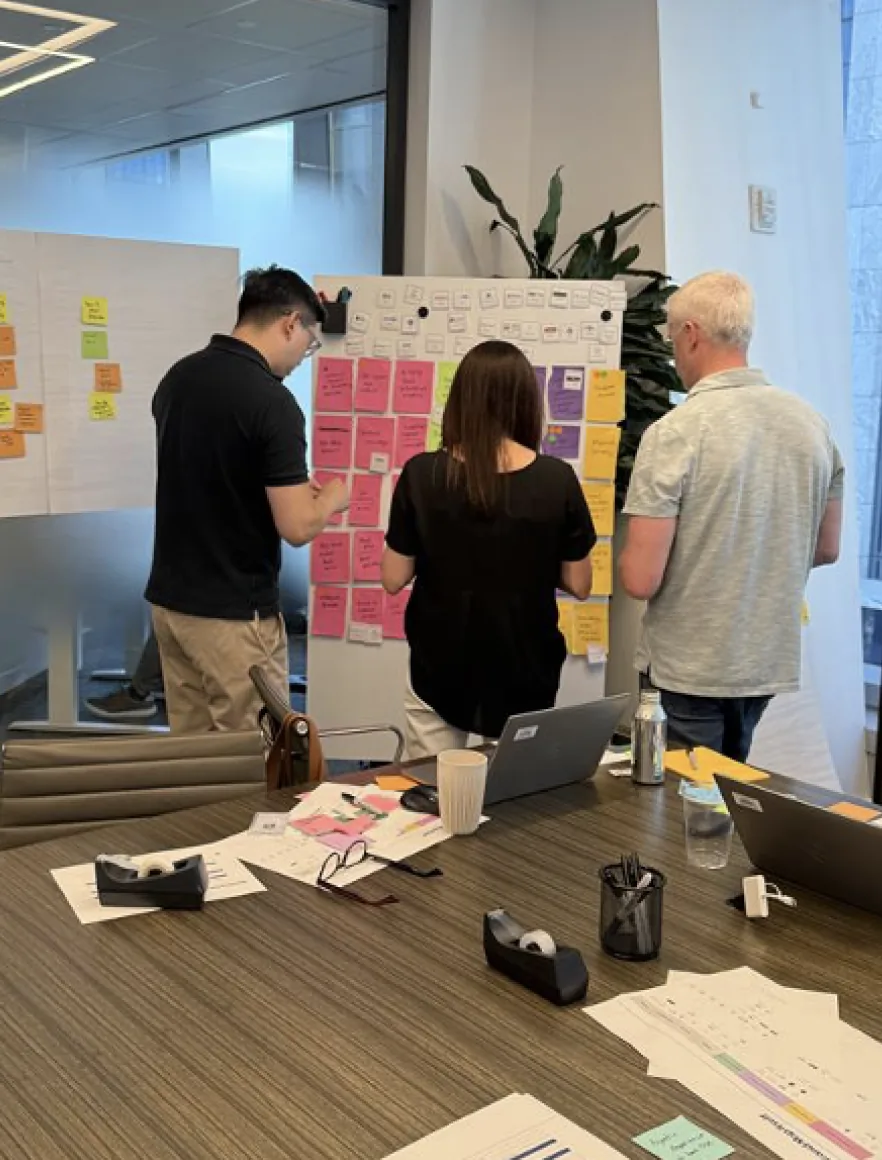
Cross-functional workshop with stakeholders ideating new card value propositions
A cross-functional workshop with stakeholders, ideating new card value propositions before research.

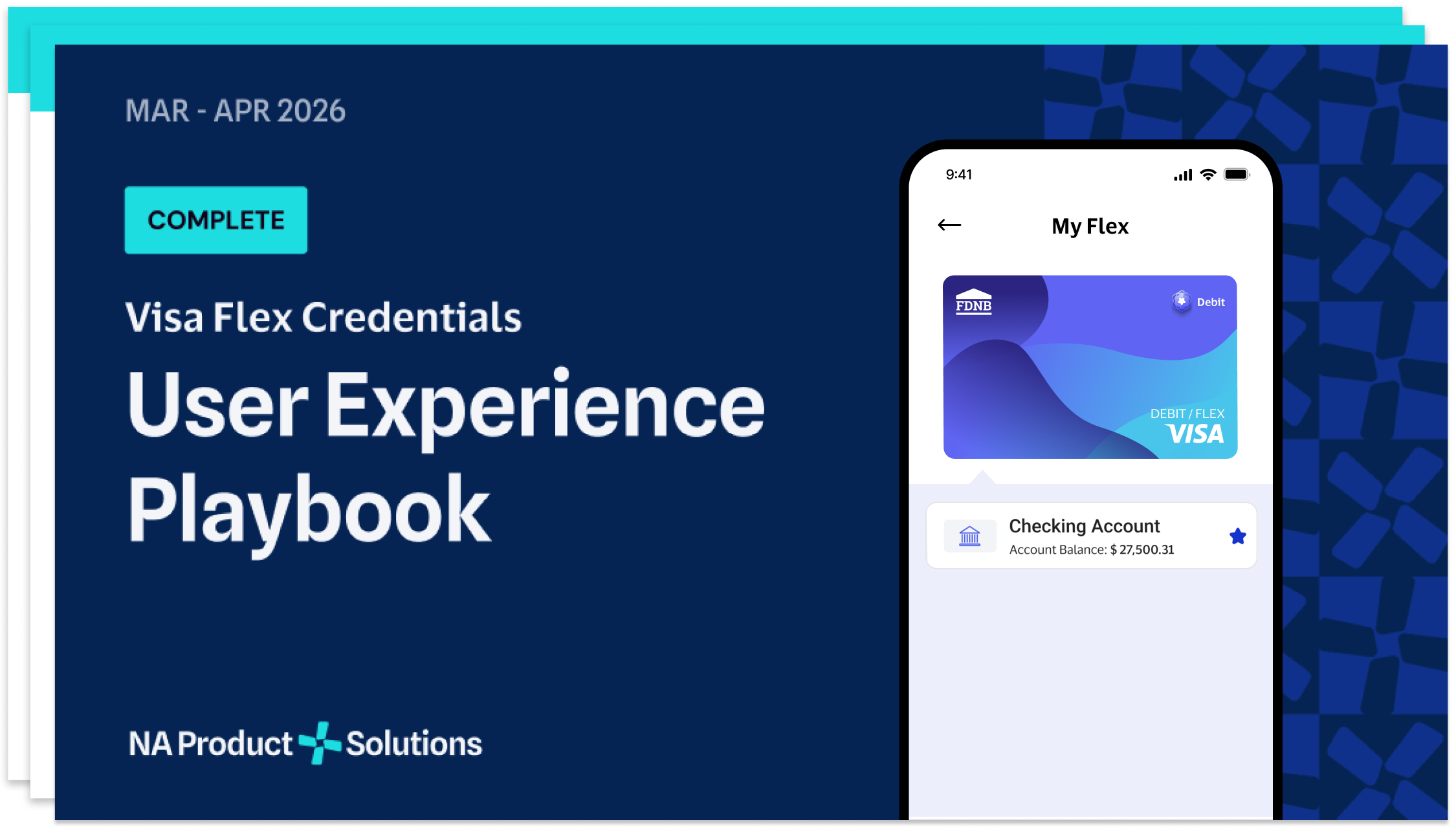
Two people can’t scale by doing more work, we scaled by increasing our impact. I built partnerships across North America, Global Design, Research, and external agencies so we could pull in the right expertise without growing headcount, and leveraged AI to increase productivity. A Flex UX playbook we created grew from a regional deliverable into a cross-regional source of truth that other teams built on.

Pages from the Flex product playbook, showing shared research, experience patterns, and insights compiled as a cross-regional source of truth
The Flex playbook, which evolved from a regional deliverable into a cross-regional source of truth other teams could build on.

Midway through the year, I was asked to take on Visa’s seven-person Europe team during a period of transition—a team I’d never met in person. I built working rhythms, increased cross-region communication, and coached individually, applying the same principle that built North America: clarity, optimism, and impact—letting people work with more confidence and less oversight.

Within 13 months, the North America function had grown from an idea into a trusted partner influencing product strategy across five priority areas.

The team helped move customer evidence earlier in the development process, created reusable organizational knowledge, increased its capacity without adding headcount, and developed relationships that expanded Design & Research’s role beyond individual engagements.

Building the function reinforced something I believe strongly about design leadership: scaling impact doesn’t necessarily mean scaling the size of the team.

Working across regions has solidified how I think about design leadership. It means staying close to the distinct needs of each business while connecting teams to the broader design organization, its people, and capabilities.

That has become especially important as GenAI rapidly changes both the tools we use and the conversations designers and researchers are having about their craft. It has reinforced something I believe strongly: the best design leaders don’t simply represent design to the business—they understand both deeply enough to connect them.